Let's dispel a myth about what the Canary Islands are and how many they are! Let's start by saying that the Canary Islands are one of the most popular destinations in the world, a Spanish archipelago that unites volcanic landscapes, golden, black or pebbly beaches, natural pools incredible and a mild climate all year round
But what are the Canary Islands and how many are there exactly?
In this detailed guide we will take you to discover the 8 inhabited islands that make up this corner of paradise in the Atlantic Ocean: Tenerife, Gran Canaria, Lanzarote, Fuerteventura, La Palma, La Gomera, El Hierro and La Graciosa. Get ready to explore each island, learn about their unique characteristics, and discover which one might be your next destination.
Because many people think that there are only seven Canary Islands.
The Canary Islands are traditionally considered to be seven, but this statement is only correct from an administrative standpoint. In fact, the eighth inhabited island, La Graciosa, is still politically and administratively dependent on the largest island: Lanzarote. However, if we're talking about inhabited islands, the correct number is eight!
Introduction to the Canary Islands: A Paradise in the Atlantic
Located approximately 100 kilometers off the northwest coast of Africa, the Canary Islands are a Spanish territory that attracts millions of tourists every year. In fact, thanks to their geographical location, they enjoy a subtropical climate with average temperatures between 20°C and 25°C all year round, earning them the nickname "“Islands of Eternal Spring”.But it's not just the climate that makes them special: their volcanic origins have created spectacular landscapes, while their culture, influenced by Spain, Africa, and Latin America, makes them a fascinating melting pot.
How many Canary Islands are there? The official answer is 8, but there was a time when only the seven largest islands were counted. With the official recognition of La Graciosa as the eighth inhabited island in 2018, the archipelago has expanded its appeal. In this article, we'll answer the question "what are the Canary Islands?" by exploring their characteristics, attractions, and reasons to visit them.
How Many Canary Islands Are There? An Accurate Count
The Canary Islands archipelago consists of eight inhabited islands and several smaller uninhabited islets, such as Los Lobos and Roque del Este. The main islands are administratively divided into two provinces:
- Province of Santa Cruz de Tenerife: Tenerife, La Palma, La Gomera, El Hierro.
- Province of Las Palmas: Gran Canaria, Fuerteventura, Lanzarote, La Graciosa.
With a total area of 7,493 km² and a population of approximately 2.2 million, the Canary Islands are a blend of modernity and tradition. Their volcanic origins date back millions of years, and even today some volcanoes, such as Teide in Tenerife or Cumbre Vieja in La Palma, are reminders of this geological history.
What are the Canary Islands? Let's discover them one by one.
Tenerife: The Island of Eternal Spring
Tenerife is the largest of the Canary Islands, with an area of 2,034 km² and a population of over 900,000 inhabitants. It is famous for the Teide, the highest active volcano in Spain (3,718 metres), which dominates the island with its grandeur. The beaches, such as Playa de las Américas and Costa Adeje, attract sun and sea lovers, while cities like Santa Cruz de Tenerife offer a lively cultural scene with festivals such as Carnival, one of the most famous in the world.
What makes Tenerife special? Its variety: in a single day you can go from sandy beaches to the mountain trails of Teide National Park.
Discover the best beaches in Tenerife
Gran Canaria: A Miniature Continent (850,000 inhabitants)
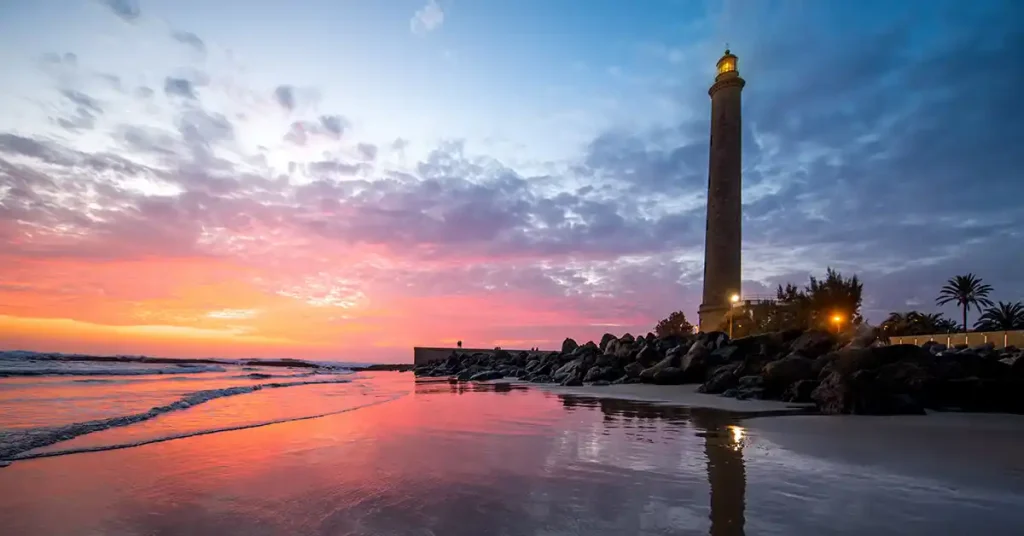
Gran Canaria is often referred to as “a miniature continent” for the diversity of its landscapes. The dunes of Maspalomas, reminiscent of the Sahara Desert, coexist with the central mountains and picturesque villages like Tejeda. Las Palmas, the capital, is a cosmopolitan city with a long urban beach, Playa de Las Canteras, perfect for a sunset stroll.
If you love nature, don't miss the Roque Nublo, a volcanic monolith that is the symbol of the island. Gran Canaria is ideal for those looking for a complete holiday: sea, mountains and culture in one place.
Lanzarote: The Volcanic Island
Lanzarote, with around 150,000 inhabitants, is an island that seems to belong to another planet. His lunar landscapes, the result of volcanic activity in the 18th and 19th centuries, are protected in the Timanfaya National Park.
Here you can see natural geysers and black lava fields stretching to the horizon. Local artist César Manrique influenced the island with works such as Jameos del Agua, a cave transformed into an art space.
Lanzarote is perfect for those looking for an out-of-the-ordinary experience, between vineyards grown on volcanic ash and wild beaches like Playa Papagayo.
Fuerteventura: Endless Beaches
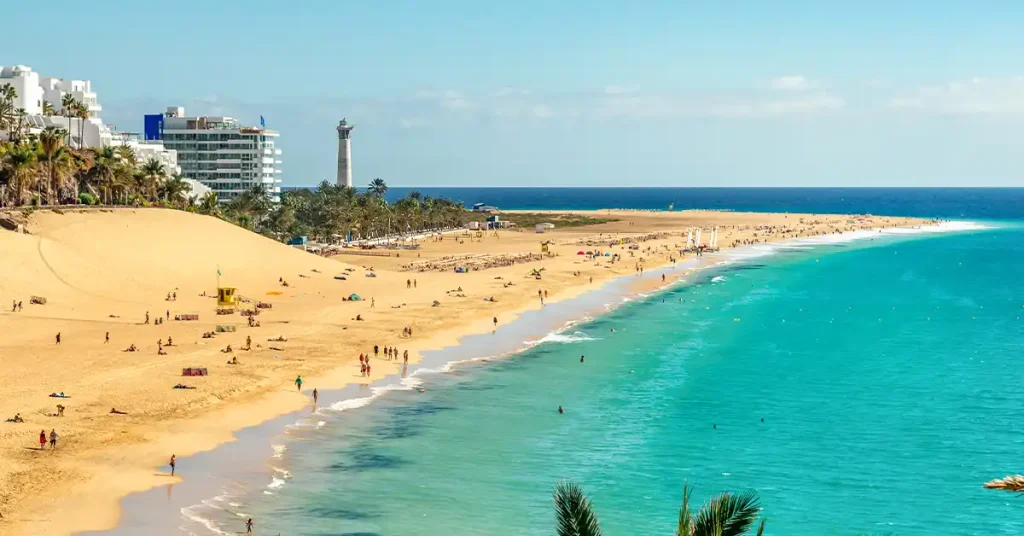
Fuerteventura, with its 100,000 inhabitants, is synonymous with endless beaches and constant wind, a paradise for surfers and kitesurfers. With its 1,660 km², it is the second largest island and boasts over 150 km of coastline, including Corralejo and Jandía. The arid climate makes it similar to a desert, but its turquoise waters they are an irresistible invitation.
Any advice? Rent a car e Visit the Corralejo Dunes Natural Park: you will feel like you are in an adventure movie.
La Palma: The Beautiful Island
Nicknamed “La Isla Bonita” (yes, just like the Madonna song!), La Palma is a verdant oasis with laurisilva forests and spectacular trails. The Cumbre Vieja volcano, which erupted in 2021, has attracted worldwide attention, but the island remains a destination for peace and nature. The Caldera de Taburiente, a huge crater Surrounded by pine forests, it is one of the natural wonders of the Canary Islands.
La Palma is ideal for trekking and astronomy lovers.: its clear sky is home to one of the best observatories in the world, the Roque de los Muchachos.
La Gomera: Nature's Reflection
La Gomera is a’wild and authentic island, far from mass tourism. Garajonay National Park, a UNESCO World Heritage Site, is a primeval forest often shrouded in fog, creating a magical atmosphere. The "Silbo Gomero" is still spoken here, a whistled language anciently used to communicate between the valleys.
La Gomera is perfect for those seeking tranquility and deep contact with nature.
El Hierro: The Sustainable Island
El Hierro is the smallest and most remote of the Canaries, with just 268 km² and a population of approximately 11,000. It is a model of sustainability: since 2014, it has used wind and hydropower to cover 100% of its needs. Its seabed is among the richest in the archipelago, ideal for diving.
If you want to unplug, El Hierro is the right choice: wild landscapes and a slow pace of life will conquer you.
La Graciosa: The Hidden Pearl
La Graciosa, the eighth inhabited island, is a jewel of 29 km² without paved roads or cars. Accessible by ferry from Lanzarote, it offers pristine beaches like Playa de las Conchas and a totally relaxing atmosphere.
With only 700 inhabitants, it is the place perfect for those seeking peace and simplicity.
A Personal Tip: My Experience in La Gomera
Living in the Canary Islands, I was fortunate enough to spend a few days on La Gomera, an island that left me with an indelible memory. One morning, while walking along the paths of Garajonay Park, I witnessed a demonstration of the silbo gomeroAn elderly local man whistled a message that reverberated through the valley, and the sound, amplified by the echo, sent shivers down my spine. It was like stepping back in time.
IMy advice? Book a guided tour of this park.Wear comfortable shoes, bring a bottle of water, and a camera. The views through the fog and the rays of sunlight filtering through the trees are something you'll never forget.
Why Visit the Canary Islands?
The Canary Islands offer something for everyone. Love sports? Fuerteventura and Lanzarote are perfect for surfing and windsurfing. Prefer nature? La Palma and La Gomera will amaze you with their hiking trails. Looking for relaxation? Gran Canaria and Tenerife have world-class resorts and beaches. And if you want a unique experience, La Graciosa and El Hierro will take you away from the hustle and bustle.
To learn more about the biodiversity of the archipelago and plan your trip, I recommend you visit the official website of the Government of the Canary Islands, full of useful information on events, transport and attractions.
FAQ: Frequently Asked Questions about the Canary Islands
Fuerteventura and Lanzarote tend to be cheaper for accommodation and food, thanks to less urbanization than Tenerife or Gran Canaria.
Tenerife is famous for its stable climate, but all the islands enjoy mild temperatures all year round.
All 8 are accessible, although La Graciosa and El Hierro require a little more planning for transportation.
Conclusions: Which Island to Choose?
Answering the question "which Canary Islands are there, and how many?" opens up a world of possibilities. Whether you're an adventurer, a culture buff, or simply seeking relaxation, there's an island perfect for you. Tenerife for its liveliness, La Palma for its nature, La Graciosa for its peace: what will be your next destination?
But... if you're unsure which of the eight wonderful islands to choose for your next Canary Island vacation, perhaps we can help. Thanks to our travel agency, TodaCanarias, which has been operating locally for over 10 years, we can organize a tailor-made vacation for you!