Canary Islands History: An Epic Journey into the Islands' Past
Discover the fascinating history of the Canary Islands!
Not everyone knows that
The Canary Islands have a history spanning more than 1000 years!
Imagine an archipelago suspended in the Atlantic Ocean, the cradle of ancient civilizations, the scene of epic conquests, and a crossroads for explorers like Christopher Columbus. From the mysterious Guanches, who carved out their existence in volcanic caves, to the Spanish conquest that transformed the islands, to their role as a bridge to the Americas, the history of the Canary Islands is a compelling tale.
Discover archaeological sites, colonial villages, and museums in Tenerife, Gran Canaria, and beyond, and be enchanted by a past that also has Italian roots.
But
Why Immerse Yourself in the History of the Canary Islands?
The Canary Islands are more than just beaches and volcanoes: they are a stage where ancient civilizations have intertwined. The history of the Canary Islands transports you from the Guanches' rituals under starry skies to Columbus's ships sailing into the unknown, to the Italian influences brought by Genoese and Venetian merchants. Exploring this history means:
1. Reliving the past of the Guanches
Reliving the Guanches' Past: Mummies, Cave Paintings, and Granaries Carved into the Rock
2. Follow in Columbus' footsteps
The Canaries were his last stop before leaving for America.
3. Discover the Italian heritage
Italian traders and navigators left an indelible mark
4. Visit UNESCO sites
Colonial villages and museums that preserve centuries of history.
With a mild climate (18-24°C), the Canaries are perfect for exploring historical sites outdoors.
Contact us now via WhatsApp to arrange a historical tour that will take you back in time!
Are you ready to dive into the
Historical route of the Canary Islands?
The Guanches: The Ancient Lords of the Canaries
Before the arrival of Europeans, the Canary Islands were inhabited by the Guanches, a Berber people who arrived from North Africa around the first millennium BC. They lived in harmony with nature, in caves like Belmaco on La Palma, growing barley and raising goats. Their mummies, exhibited at the Museo Canario in Gran Canaria, reveal sophisticated embalming techniques, while the cave paintings of Gáldar reveal spiritual beliefs. The Cenobio de Valerón, a complex of granaries carved into the rock in Gran Canaria, bears witness to their social organization. The Guanches fiercely resisted the Spanish, leaving a legacy that lives on in modern festivals like the Fiesta de los Aborigenes.
The Spanish Conquest: A Century of Battles
The Spanish conquest of the Canary Islands began in 1402, when the Norman Jean de Béthencourt landed on Lanzarote, and concluded in 1496 with the subjugation of Tenerife. Each island put up resistance: in Gran Canaria, the Guanche Doramas led a strenuous defense, while in Tenerife the Battle of Acentejo (1494) was a turning point. The Spanish built fortifications, such as the Castillo de San Cristóbal on Tenerife, and introduced Christianity, erecting churches such as the Cathedral of Santa Ana in Las Palmas. This era marked the transformation of the Canary Islands into a colonial outpost, but also the loss of much of the Guanche culture. Visit the Museo de la Conquista in Betancuria (Fuerteventura) for more information.
Christopher Columbus and the Dream of the Americas
The Canary Islands were a launching pad for Christopher Columbus's explorations, as he stopped in the archipelago on his voyages to the Americas. In 1492, Columbus stopped in Gran Canaria and La Gomera, repairing his ships and stocking up on water and provisions before crossing the Atlantic. The Casa de Colón in Las Palmas, a museum dedicated to the Genoese navigator, preserves maps and documents that recount his passage. Columbus's presence underscores the ancient relationship between Italy and the Canary Islands: Genoese merchants, such as the Grimaldis, were active in the Canarian ports as early as the 14th century, financing the sugar and wine trade. Explore La Gomera, where Columbus is said to have prayed in the Church of the Assumption, to relive his connection to the islands.
The Canaries as an Atlantic Crossroads
From the 16th to the 18th century, the Canary Islands became a crucial hub for Atlantic trade routes. Santa Cruz de Tenerife and Las Palmas welcomed ships bound for the Americas, laden with wine, sugar, and silk. This period also attracted pirates, such as Francis Drake, who unsuccessfully attempted to sack Las Palmas in 1595. Flourishing trade brought wealth, visible in the colonial mansions of Vegueta (Gran Canaria) and the fortifications of Santa Cruz. The Italians played an important role: Venetian and Genoese merchants established trading posts, contributing to the construction of churches and palaces. Visit the Naval Museum of Tenerife to discover model galleons and stories of naval battles.
Italian Influence in the Canary Islands
The ancient relationship between Italy and the Canary Islands goes beyond Columbus. As early as the Middle Ages, Italian navigators such as Lanzarotto Malocello (from whom the name Lanzarote derives) explored the archipelago, paving the way for trade. In the 15th and 16th centuries, Genoese families such as the Grimaldi and Spinola families invested in the sugar trade, leaving traces in the architecture of villages like Teror (Gran Canaria). The Italian presence is also reflected in Canarian surnames, such as D'Ambrosio and Spinola, and in imported agricultural techniques, such as vine growing. Today, this legacy is celebrated in festivals such as the Fiesta de San Roque in Garachico (Tenerife), dedicated to a saint venerated by Italian immigrants. Discover the Casa de Colón Museum to explore these ties further.
The Cultural Awakening: From the 19th Century to Today
In the 19th century, the Canary Islands opened up to tourism, attracting European travelers fascinated by the climate and history. Modern Canary Island history is marked by a revival of Guanche identity, with archaeological research and festivals celebrating indigenous roots. San Cristóbal de La Laguna (Tenerife), a UNESCO World Heritage Site, became a symbol of this cultural resurgence. In the 20th century, the islands faced challenges such as emigration, but today they are a global destination that balances modernity and tradition. The Santa Cruz Carnival, with its parades evoking the colonial past, is an example of this fusion. Visit the Museum of Nature and Man in Tenerife for a journey into recent history.
CANARY ISLANDS TRAVEL OFFERS 2025/2026
And finally we leave you some
Historic sites to visit in the Canary Islands!
The history of the Canary Islands is palpable in archaeological sites, museums, and colonial villages. Here's a must-see selection:

San Cristóbal de La Laguna, Tenerife
UNESCO city with colonial streets and the Museo de Historia y Antropología.

Vegueta (Las Palmas), Gran Canaria
Historic district with the Cathedral of Santa Ana and the Canarian Museum.

Teguise, Lanzarote
Ancient capital with the Castillo de Santa Bárbara and the Piracy Museum.

Betancuria, Fuerteventura.
First Spanish settlement with the Church of Santa María and the Archaeological Museum.

Belmaco, La Palma
Guanche caves with rock paintings, which can be visited in the Parque Arqueológico.
FAQ: We answer the most frequently asked questions
Who were the Guanches?
The Guanches were the indigenous people of the Canary Islands, of Berber origin. Discover their mummies at the Museo Canario!
When did the Spanish conquest take place?
The Spanish conquest of the Canary Islands was completed in 1496. Visit the Castillo de San Cristóbal in Tenerife!
Which historical sites to visit?
La Laguna (Tenerife), Vegueta (Gran Canaria), Betancuria (Fuerteventura). Contact us for a tour!
What is the role of Christopher Columbus?
Columbus landed in the Canary Islands in 1492. Explore the Casa de Colón in Gran Canaria!
Are there any links with Italy?
Yes, Genoese and Venetian merchants influenced trade. Discover Lanzarotto Malocello in Lanzarote!
Which museums do you recommend?
Museo de la Naturaleza y el Hombre (Tenerife) and Museo Canario (Gran Canaria).
Can I see cheek remains?
Yes, in Belmaco (La Palma) and Cenobio de Valerón (Gran Canaria). Plan with us!
How to book a historical tour?
Write us on WhatsApp for a personalized itinerary
Whatsapp No.: +34 642 33 12 08
Are there any UNESCO sites?
Yes, San Cristóbal de La Laguna in Tenerife. Find out more on our website!
Does the story vary between islands?
Yes, each island has unique sites, like Teguise in Lanzarote or Belmaco in La Palma.
But
Now that you've learned about the history of the Canary Islands, why not plan your next vacation?
We have prepared a comprehensive guide to the Canary Islands for our users and customers. Take advantage of it, it's free!
Don't miss ...
Our Latest Blog Articles

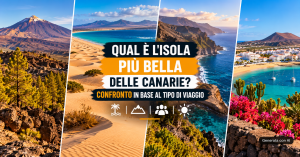
Which is the most beautiful Canary Island? Comparison by type of trip.
There's no Canary Island more beautiful than this. Tenerife is perfect for those seeking a varied holiday, Fuerteventura for those who love wide beaches, Lanzarote for its volcanic landscapes, and Gran Canaria for a combination of sea, city life, and amenities. La Palma, La Gomera, and El Hierro are all interesting options for nature, hiking, and tranquility.
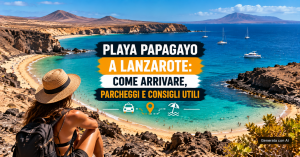
Playa Papagayo in Lanzarote: How to get there, parking, and helpful tips
Playa Papagayo is located in the south of Lanzarote, within the Los Ajaches Natural Monument, near Playa Blanca. It can be reached by car via a dirt road: access costs €3 per vehicle for non-Lanzarote residents, with electronic payment. The beach has parking but very few services.
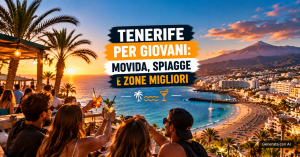
Tenerife for Young People: Nightlife, Beaches, and Best Areas
For a youthful trip to Tenerife, Playa de las Américas is the area to consider first if nightlife is your priority. Los Cristianos offers a better balance between beach and nightlife, Costa Adeje focuses more on beach clubs and services, while El Médano is best for sports, a casual atmosphere, and quieter evenings.

Does it ever rain in the Canary Islands? When and on which islands?
Yes, it rains in the Canary Islands, but the amount and frequency vary greatly between islands and even between areas of the same island. Lanzarote and Fuerteventura are very arid; Tenerife and Gran Canaria have marked differences between north and south; La Palma is rainier. The months with the highest probability of precipitation are especially autumn and winter.
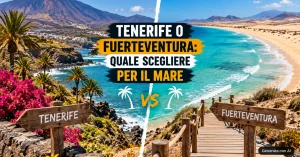
Tenerife or Fuerteventura: Which Island Is Better for the Sea?
If the sea is the main reason for your trip, I'd choose Fuerteventura for its long sandy beaches, open spaces, and almost entirely beach-based days. Tenerife is a better choice if you want comfortable, well-equipped beaches, more sheltered bays, and a holiday that combines beach life, restaurants, excursions, and other activities.
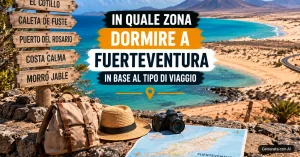
Where to stay in Fuerteventura based on your type of trip
Corralejo is the best choice for a first holiday and for those looking for services and nightlife; El Cotillo for tranquility and surfing; Caleta de Fuste for families and a central location; Costa Calma for resorts and wind sports; Morro Jable for those who prioritize long beaches and sea.
Who Are We?
We are Toda Canarias and we deal with Travel, Tourism, Excursions and Marketing in the Canaries.
Travel Agency
We are the travel agency of reference for Italians wishing to visit the Canary Islands.
Where are we?
Are you already in the Canaries and want to know how to reach us to book your holiday in the Canaries?
Tenerife Office
Our Travel Agency, Toda Canarias, is located in the south of Tenerife exactly on Avenida de Colon Costa Adeje.
- Avenida de Colón, C.C. Agua marina, 5 - Local 12C. 38660. SANTA CRUZ DE TENERIFE
You might also be interested in these services of ours
Travel agency
We have spent years personally discovering all 8 Canary Islands. Now, thanks to our experience, we can organise any trip to the client's liking.
Real Estate Agency
Over the last few years we have sold several properties thanks mainly to our staff. Today we have an in-house agency and a space dedicated only to professionals.
Advertising and marketing
This was our core business, to give visibility to others first and foremost, but when results come for oneself as well, the need becomes to grow and expand.