“Do I really need a car in the Canary Islands, or can I get by with buses and taxis?” It's one of the most practical questions we get, and the honest answer isn't the same for everyone: it depends on the island, the area you're staying in, and how much you want to travel beyond your resort.
In this guide, you'll find the real pros and cons of car rental, up-to-date costs, required documents, and details—such as rules about inter-island ferries—that you often only discover at the rental counter, when it's too late to change your mind.
Because the answer depends on where you stay.
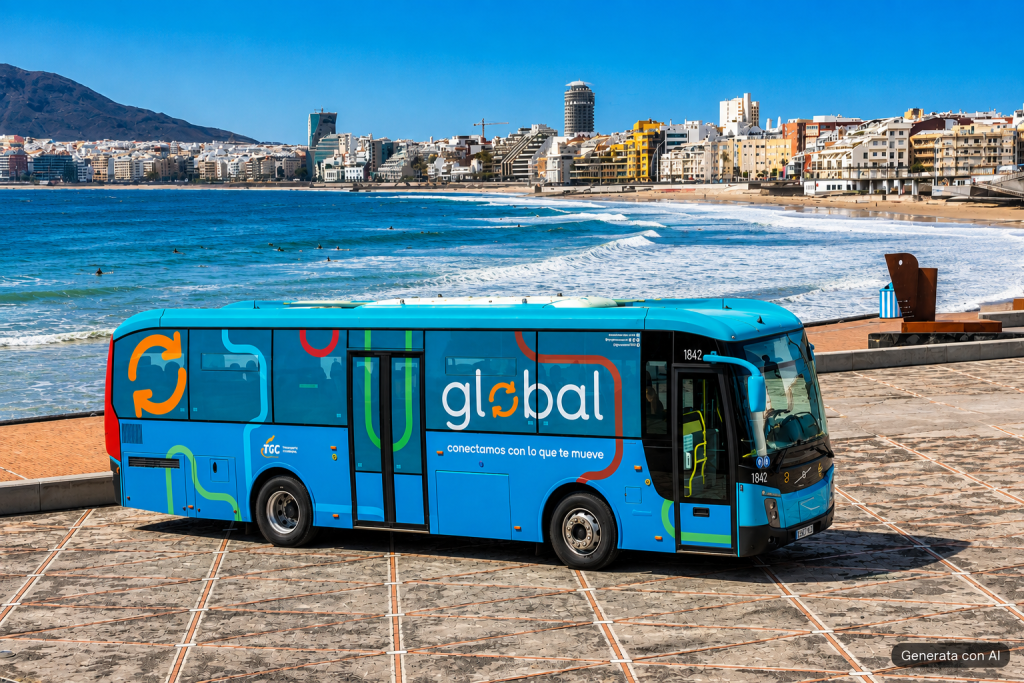
The Canaries are not a homogeneous archipelago from the point of view of transportation. The tourist areas of southern Tenerife and Gran Canaria (Costa Adeje, Playa de las Américas, Maspalomas, Puerto Rico) have an efficient bus network, all concentrated in a small space: those staying there and not planning independent excursions can get by without a car.
On islands such as Fuerteventura, Lanzarote, La Palma, La Gomera or El Hierro, however, the main attractions are further apart and public transport is sparser: here, car rental goes from being a "convenience" to an "almost necessity" so as not to depend on organised tours or long-distance taxis.
An exception in itself: La Graciosa. Car rental isn't even an option on this island: private vehicles aren't allowed, the roads aren't paved, and you can only get around on foot, by bicycle, or by authorized local 4x4 taxis. If your itinerary includes a trip to La Graciosa (usually a day trip from Lanzarote), it should be considered a car-free stop, not a stop you'll need to cover with your rental vehicle.
The pros of renting a car in the Canary Islands
No highway tolls. The Canary Islands have no toll roads: the entire road network is free, an advantage not to be taken for granted compared to other European destinations.
Relatively cheap gasoline. Fuel prices generally range between €1.30 and €1.60 per litre, among the lowest in Europe.
Italian driving licence required. Since the Canary Islands are Spanish territory and therefore part of the EU, an international driving license is not required: a valid Italian driving license is sufficient.
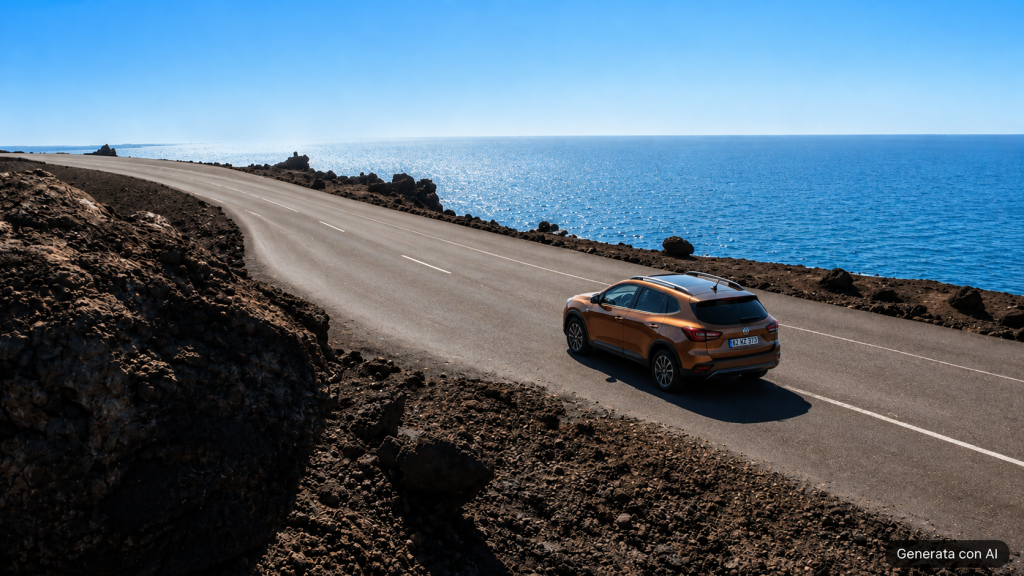
Freedom to move without time constraints. You can reach remote beaches, mountain trails, or scenic spots that organized tours often don't include, at your own pace.
Competitive prices, especially when booking in advance online. Comparing rates before you leave, instead of renting directly on site, often allows you to save significantly on the same vehicle.
The cons of renting a car in the Canary Islands
Superfluous in some tourist areas. If you're staying in a resort in the south of Tenerife or Gran Canaria and don't travel much, the cost of renting (plus insurance and parking) may not pay for itself.
Security deposit on credit card. Some companies will place a deposit on the driver's credit card; debit cards aren't always accepted, and when they are, they often require special conditions.
Basic insurance coverage with important exclusions. Damage to tires, glass, underbody, or damage occurring on unpaved roads is often excluded from standard insurance: read the contract carefully or add more comprehensive coverage.
Thinking you can use the same car on multiple islands without checking first. Always check the geographic conditions of the contract: in most cases, companies do not allow cars to be taken on inter-island ferries, with the exception (not guaranteed by all companies) of the Lanzarote-Fuerteventura route, where the car must still be returned to the island where it was picked up.
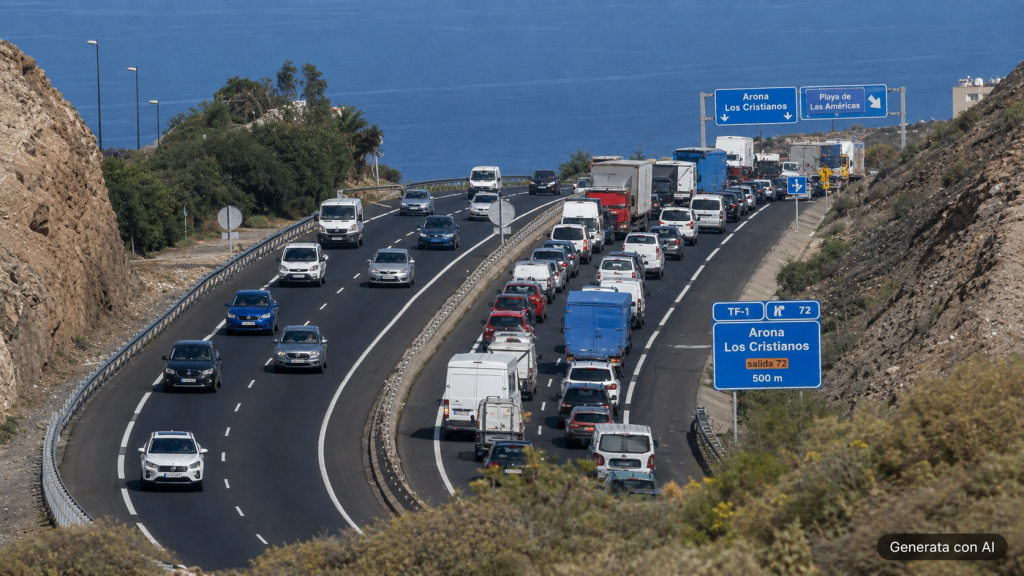
Parking is difficult in historic centers and crowded tourist areas. Narrow roads, limited parking, and, on some islands, winding mountain roads can make driving less relaxing than you might expect on holiday.
How much does it cost to rent a car?
Indicative price: An economy car generally costs between €15 and €35 per day in low season, and can rise to €50-70 per day in July, August, or over the Christmas period. This applies to a week-long rental in low/mid season.
Additional costs to consider: Child seats (approximately €5-10 per day, sometimes free if requested in advance), supplemental insurance coverage if not included, and a full tank of petrol upon return if the company applies a “full-to-full” policy.
Documents, insurance, and common mistakes
What you need at the counter: Valid Italian driving license (no international document required), ID or passport, payment card in the driver's name, and the booking voucher if you booked online. The minimum age is generally 21, with a possible surcharge for younger drivers or for certain vehicle categories.
Common mistakes to avoid:
- Assuming that “insurance included” means full coverage. Often, it's only the mandatory civil liability insurance required by law: tires, glass, and underbody remain the customer's responsibility unless additional coverage is provided.
- Book last minute in high season. Prices are rising and availability, especially for smaller, cheaper cars, is rapidly decreasing.
- Thinking about being able to use the same car on multiple islands. Always check the geographical conditions of the contract: most companies do not allow cars to be taken on inter-island ferries.
- Ignore unpaved roads in your travel plan. If you plan to reach beaches or scenic spots on dirt tracks, check that your policy allows it: many policies exclude damage that occurs off the road.
Advice from those who live in the Canary Islands
A detail that first-time visitors almost always overlook: in tourist areas, especially in historic centers and mountain towns, a compact car is almost always a better choice than an SUV or a full-size car. Parking spaces are tight, and on some mountain roads, a bulky car makes driving more tiring without any real advantages.
Another practical aspect: many local companies apply a "full-full" policy (pick up with a full tank and return it with the same tank). Refueling just before returning the vehicle, instead of having the company fill it up, almost always costs less.
Finally, if your doubt is more "how much will it cost me to get around" than "should I rent a car or not", it is also worth comparing taxis: the Canary Islands are considering a single rate for taxis throughout the archipelago, which would make costs more predictable than they are today—useful to keep in mind if you're planning an itinerary that alternates between car and public transportation. If, however, your concern is more about the route to take than the means of transport, our guide may also be helpful. Guide on what to do and see in the Canary Islands in 7 days, to understand how many stages it really makes sense to plan.

For whom it is convenient, for whom it is not
It is convenient to rent a car for: Those staying on islands like Fuerteventura, Lanzarote, La Palma, La Gomera, or El Hierro; those who want to reach beaches and trails off the beaten track; those who visit multiple areas of the same island on different days; those traveling as a couple or family and wanting to explore at their own pace.
It may not be suitable for: Those who are only staying in the tourist areas of southern Tenerife or Gran Canaria without planning any independent excursions; those who are traveling alone and would use the car very little; and those who don't have a credit card for the security deposit and don't want to manage alternatives.
Frequently Asked Questions
Do I need an international driving licence to rent a car in the Canary Islands? No. An Italian driving licence is valid throughout Spain, including the Canary Islands, as it is part of the European Union.
Is it worth renting a car if I'm staying in the south of Tenerife or Gran Canaria? It depends: if you stay in the tourist area and get around by bus or on foot, you can do without it. If you want to explore the hinterland or other areas of the island, a car remains the most convenient solution.
Can I take my rental car from one island to another by ferry?
In most cases, no: the geographical conditions of the contract generally don't allow it, and a separate rental is required for each island. A common exception (but not guaranteed by all companies) is the Lanzarote-Fuerteventura route, where some companies allow it as long as the car is returned to the same island. Always check with the chosen company before booking the ferry.
How much does it cost to rent a car in the Canary Islands? Typically between €15 and €35 per day in low season, up to €50-70 per day in high season (July, August, Christmas).
Is extra insurance mandatory? No, third-party liability is already included by law in all rentals. More comprehensive coverage (including tires, glass, and underbody) is optional but recommended if you plan to drive on mountain roads or park on the street.
What is the minimum age to rent a car in the Canary Islands? Generally 21 years old, but it varies from company to company: some vehicle categories or younger drivers may require a surcharge.
Still not sure if you need a car for your itinerary?
It depends on where you stay, how many islands you visit, and what you really want to see. Write to us on WhatsAppWe help you understand what's best for you, without selling you a service you don't need.
In short: is it worth renting a car in the Canary Islands?
- Yes, almost always, if: Are you visiting Fuerteventura, Lanzarote, La Palma, La Gomera or El Hierro, or do you want to explore beyond the tourist area?
- You can do without it if: you stay in the south of Tenerife or Gran Canaria and move little
- Things to know before booking: Sufficient Italian driving license, security deposit usually on a credit card, car not transferable between islands via ferry
- Approximate cost: €15-35/day in low season, €50-70/day in high season
If you're unsure which option is right for your specific itinerary, that's the kind of question we can answer in a minute on WhatsApp.