Dreams of living in the Canary Islands, immersing yourself in a mild climate, golden beaches And a relaxed lifestyle? The Canary Islands (Tenerife, Gran Canaria, Lanzarote, Fuerteventura, La Palma, La Gomera, El Hierro, and La Graciosa) attract thousands of Italians every year with their affordable cost of living, favorable taxes, and safety.
But what are the pros and cons? How to move and what documents are needed?
In this complete guide for Italians, Let's explore everything you need to know about living in the Canary Islands.From up-to-date housing costs (studios from €180,000!) to rent, from work to retirement, from campervan life to families with children, to a comparison with Portugal and 10 helpful FAQs. With a curious anecdote and practical advice, find out if the Canary Islands are your new home!
Why go and live in the Canary Islands?
The Canaries are a dream for many Italians thanks to a unique combination of factors. In fact Every year hundreds of Italian families move to live in this tropical paradise European, just a 4-hour flight from Italy.
Let's find out Together the main reasons which is why many compatriots decide to go and live in the Canary Islands, in Spain:
- Mild climate all year roundTemperatures between 18-30°C, without the need for heating, allow you to live outdoors, between beaches and volcanoes.
- Affordable cost of livingA single person can live comfortably on €1,500-2,500 a month, and the low taxes (7% IGIC instead of VAT) attract entrepreneurs and retirees.
- Safety and hospitality: Low crime rate and a large Italian expat community (over 28,000 in Tenerife) make integration easy.
- Proximity to Italy: Direct flights to the Canary Islands from Milan, Rome, Venice and Naples (4 hours, €50-200) maintain ties with the family.
- Quality of lifeNature, water sports and nightlife (read Movida Canaries) offer a perfect balance between relaxation and fun.
Furthermore, the Canaries are a Special Economic Zone (SEZ), with tax breaks such as the 4% corporate tax, ideal for those who want to start a business.
Living in the Canary Islands for families with children

The Canary Islands are ideal for families with children who want to move there, thanks to their safety, mild climate, and educational and recreational opportunities.
Education and Schools
The archipelago offers free public schools (in Spanish) and private international schools such as the British School of Gran Canaria (€5,000-10,000/year), with bilingual Spanish-English programs. For example, in Costa Adeje (Tenerife), many Italian families choose local schools for integration.
Activities for childrenTheme parks such as Siam Park (Tenerife, €40/entry) and Angry Birds Activity Park (Gran Canaria) guarantee fun, while excursions to Teide National Park or Timanfaya (Lanzarote, €20) are educational and safe.
Healthcare
EU residents have free access to public healthcare, with modern pediatric hospitals in Tenerife and Gran Canaria. Private clinics cost €20-50/month with insurance.
Security
The low crime rate and welcoming communities, like Los Cristianos (Tenerife), are perfect for families. A family of four spends around €2,000-2,500/month, including rent, living comfortably in areas like Puerto de la Cruz or Las Palmas.
In addition, local events such as the Maspalomas Carnival (February) involve children with colorful parades.
Documents required to live in the Canary Islands

To live in the Canary Islands as an EU citizen (Italian), the bureaucracy is manageable but requires attention. Here are the necessary documents:
- Valid identity documentIdentity card or passport for travel abroad, sufficient to enter as an EU citizen.
- NIE (Número de Identificación de Extranjeros)Mandatory within 3 months for work or residence. The provisional (white) NIE is valid for 3 months; apply for one at the Foreigners' Office or Police Commission (€15, passport holder, EX-15 form, photo). The green (definitive) NIE is obtained with a job, a business, at least €6,000 in your bank account, or health insurance.
- Empadronamiento: Registration at the Padrón Municipal of the chosen municipality (free, NIE number, rental agreement, passport).
- Tarjeta de Seguridad SocialFor contributions, pensions, and healthcare, apply for it from Seguridad Social with your NIE and ID (free).
- AIRE (Registry of Italians Residing Abroad)Register within 90 days through the Spanish consulate (free, avoids double taxation and is mandatory for those who decide to reside for tax purposes in the Canary Islands or abroad).
Healthcare and hospitals in the Canary Islands
Healthcare in the Canary Islands is a strong point for those who choose to live there, with a high-quality public and private system. Public healthcare: EU citizens, like Italians, have free access to public healthcare with the European Health Card (TSE) or, for residents, with the Social Security Card (obtained with NIE). The public system covers general visits, emergencies, surgery, and pediatric care. Main hospitals include:
- Gran Canaria University Hospital Doctor Negrín (Las Palmas): Referral center for advanced surgery and pediatrics, with 600 beds.
- Nuestra Señora de Candelaria University Hospital (Tenerife): Specializing in oncology and cardiology, with pediatric departments.
- Hospital General de Fuerteventura: Full services, but smaller, ideal for local emergencies.
- Hospital Insular de Lanzarote: Covers basic and specialist care, with short waiting times.
Private healthcare
Many expats choose private insurance (e.g., Sanitas, Mapfre) for quick specialist visits (€20-50/month, copay €5-10/visit). Private clinics like Hospiten (Tenerife, Gran Canaria) offer services in English and Italian, with minimal waiting times.
Private visit costs:
A private specialist visit without insurance costs €50-100; an ultrasound scan costs €80-120.
Pharmacies in the Canary Islands
Pharmacies in the Canary Islands are well distributed throughout both tourist and residential areas and are open 24/7 in the main cities, with inexpensive generic drugs (e.g., paracetamol for €2-3).
Advice:
- Carry the TSE for the first few months; apply for the Tarjeta de Seguridad Social for residency.
- For families, check pediatric coverage (e.g., Candelaria has neonatal wards).
- Italian expats in Los Cristianos recommend private insurance to avoid waiting lists. For example, an Italian in Tenerife paid €30/month for dental and eye insurance, lower costs than in Italy.
Pros and Cons of Living in the Canary Islands

Weigh the pros and cons to decide if living in the Canary Islands is right for you, based on the experiences of Italian expats and data updated to 2025.
Pros: Advantages of moving and living in the Canary Islands
- Mild climateTemperatures range from 18-30°C year-round, with no heating required (savings on energy bills: €50-100/month, low rates of €0.15-0.20/kWh). African and Gulf Stream influences ensure constant sunshine, ideal for an outdoor lifestyle.
- Affordable cost of livingRent: €800-1200, groceries €200-300/month, dinner out €30-40/person. Low taxes (7% IGIC instead of VAT) and incentives for investors (ZEC: 4% corporate tax).
- Security: Low crime rate (among the lowest in Europe), perfect for families and retirees.
- Proximity to ItalyDirect flights (4 hours, €50-200) from Milan or Rome with Ryanair, easyJet, or Vueling. See Milan to Canary Islands Flights.
- subsidized pension: Taxation at 15% for private individuals, with over 20,000 Italian pensioners.
Cons: Disadvantages of moving to the Canary Islands
- Low wagesAverage €1,200-1,300/month, lower than in Italy, especially in tourism.
- High real estate costsStudios €180,000-220,000, 1-bedroom apartments in tourist areas €250,000+, villas €700,000+ (plus €10% notary fees).
- Intense tourismAreas like Playa de Las Américas (Tenerife) can be crowded, with noise and traffic.
- BureaucracyLong-term tax exemption for pensioners (up to 24 months); NIE requires time and organization.
- Limited job opportunitiesOutside of tourism, Spanish, English, and specific skills are required.
Cost of Living in the Canary Islands

Without a doubt, the cost of living in the Canary Islands is significantly lower than that in Italy for several reasons. For this reason, we can confirm that it is a strong point of living in the Canary Islands. Below, we provide a monthly estimate for a single person (2025, sources: Numbeo and expat):
- RentStudio apartment in the center €900-1200 (Tenerife/Gran Canaria); outskirts €700-900. Tourist areas like Costa Adeje or Playa del Inglés are more expensive.
- Food shopping: €200-300 (cheap fruit, fish, and alcohol thanks to IGIC 7%). For example, a kilo of local bananas costs €2-3.
- TransportationBuses (“guaguas”) €50-100/month; gasoline €1.20/liter; car rental €30-50/day.
- UtilitiesElectricity/water/internet €50-100 (no heating costs due to mild climate, electricity at €0.15-0.20/kWh, among the lowest in Europe).
- Free timeDinner out €30-40 (e.g., paella in Puerto del Carmen); gym €35; cinema €8; Teide excursion €40.
- Monthly total€1,000-1,500 for a single person; €2,000-2,500 for a family of four.
Obviously, this is only a general estimate of the cost of living in the Canary Islands, which can vary depending on the individual's lifestyle and personal needs.
Buying and pricing of houses and apartments
Let's dispel a myth right away... there are no longer houses or apartments for sale in the Canary Islands for €90,000.... Prices per square meter for an apartment in tourist areas like Los Cristianos or Puerto de Mogan now range between €5,000 and €7,000. For example, a 59-square-meter apartment in Playa de Las Americas can cost (in 2025) €300,000, excluding notary fees, registration fees, and other intermediaries.
But despite rising house prices, the lack of heating and low electricity costs (compared to €0.30/kWh in Italy) significantly reduce bills, making the Canaries attractive for those looking to save money.
Living in the Canary Islands: Rental Prices

Rental prices in the Canary Islands vary depending on the island and location, with a significant increase in tourist areas in recent years. Below are the average costs (2025):
- Prices Rentals Tenerife and Gran CanariaStudio apartment in the city center (Santa Cruz de Tenerife, Las Palmas de Gran Canaria) €900-1200/month; in tourist areas like Maspalomas, Playa del Inglés, or Costa Adeje, annual rental costs for a studio apartment can rise to €1500-1600 for a yearly lease; in the suburbs or inland areas, €750-950/month.
- Rental Prices in Fuerteventura and LanzarotePrices for renting a studio flat in the main tourist resorts of the two Canary Islands, such as Corralejo and Puerto del Carmen, range between €800 and €1100, while in the suburbs and pueblos prices are slightly lower.
- La Palma, La Gomera and El Hierro: Cheaper, without a doubt, with studios costing €650-900.
Difficulty finding year-round rental properties for those who want to live and work in the Canary Islands
Living in the Canary Islands for rent requires today a careful evaluation of an increasingly widespread problem: the difficulty in finding long-term apartments. In recent years, The growing demand for short-term tourist rentals has drastically reduced the offer for those wishing to settle on the archipelago. Many owners prefer to rent through platforms like Airbnb, often making it necessary to negotiate annual contracts or turn to local agencies for permanent solutions.
Advice:
- Use sites like Idealista, Fotocasa or Real estate in the Canary Islands.
- Consider temporary solutions (e.g. Airbnb or Traveling to the Canary Islands: holiday homes for 1-2 months) while you look for a stable rental.
- Make sure your contract includes utilities (electricity, water, internet) to avoid extra costs.
Work in the Canary Islands: Opportunities and Challenges
Live and work in the Canary Islands requires planning. Key areas include:
- TourismHotels, restaurants, tour guides (salaries €1,200-1,300, often seasonal). Positions such as receptionists or entertainers They are common in Playa de Las Américas or in any tourist area with hotels.
- Smart workingThe Canary Islands are a hub for digital nomads, with coworking spaces in Tenerife and Gran Canaria (e.g., Nomad Hub, €100-200/month). Variable salaries, ideal for those working remotely for Italian companies.
- Health and educationDoctors, nurses, teachers (€1,500-2,000, Spanish required).
- Real estate and water sportsOpportunities for Italians, especially in Fuerteventura (e.g. surf schools).
Challenges
Salaries are low (average €1,200-1,300) compared to rents in tourist areas. Competition is high, and knowledge of Spanish (and often English) is essential.
Resources
To look for work use InfoJobs, Turijobs, LinkedIn or Facebook pages like “Toda Canarias”
Retirement in the Canary Islands: Advantages and Disadvantages for Those Who Choose to Relocate
The Canary Islands are one of the most popular destinations for Italian retirees, with over 20,000 Italians already residing there. But is it really worth moving? Here are the main pros and cons to consider:
Pros of living in the Canary Islands as a retiree
- Reduced taxationPrivate pensioners pay approximately 15% in taxes on their pension (in Italy between 23% and 43%), after registering with AIRE and obtaining the NIE.
- Ideal climate all year round: Mild temperatures between 18°C and 30°C promote physical well-being and reduce heating costs (electricity €50-100/month). See the weather forecast for the Canary Islands
- Lower cost of livingA retired couple can live on €1,700-2,500 a month, including rent (€800-1,100 in places like Puerto de la Cruz).
- Accessible healthcareFree public healthcare for EU residents and affordable private insurance (€20-50/month).
- Italian community presentAreas such as Los Cristianos and Costa Adeje are home to numerous Italian retirees, with events, associations and typical restaurants.
Against living in the Canary Islands as a pensioner
- Complex bureaucracyTax relief can take up to 24 months, with the risk of temporary double taxation (subsequently refundable).
- Public pensioners excludedEx-INPDAP pensions remain taxed in Italy, with no possibility of tax relief.
- Loss of some benefitsPrivate pensioners lose social and family benefits linked to Italian residency.
- Possible isolationThe smaller islands (e.g. La Gomera) may be too quiet for those seeking an active social life.
Practical advice
Before moving, consult a tax advisor who specializes in foreign pensions. An example? A retiree from Rome saved over €5,000 a year by moving to Gran Canaria, but had to wait 18 months for the tax exemption to be completed.
Living in a campervan in the Canary Islands: costs, benefits, and helpful tips
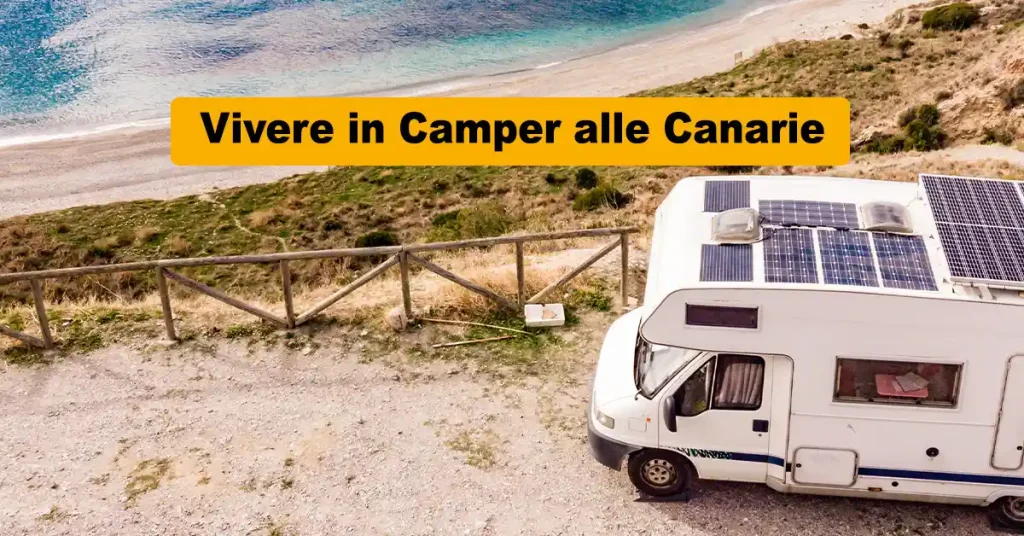
Living in the Canary Islands in a camper it has become a increasingly popular solution For those who desire freedom, nature, and affordable costs. This lifestyle allows you to explore the islands of the archipelago (from Fuerteventura to Lanzarote, passing through Tenerife and Gran Canaria). without rental constraints and with the possibility of staying close to beaches and natural parks.
Costs of living in a campervan in the Canary Islands
- Buying a camper: from €20,000 to €50,000 for a used model, €50,000-100,000 for a new model.
- Camper rental: €70-150/day, ideal for testing the lifestyle before purchasing.
- StopoverEquipped campsites, such as the Camping Nauta in Tenerife, They cost €15-30/night, including water, electricity, and Wi-Fi. Free parking is limited and regulated (maximum 48 hours in public areas).
Disadvantages and limitations of campervans in the Canary Islands
- Strict regulationsAuthorities are restricting wild camping; in Tenerife, for example, fines for unauthorized parking can reach €300.
- Small spaces: Perfect for singles or couples, less convenient for families.
- Maintenance costsRepairs and fuel (approximately €1.20/litre) can have an impact.
Tips for living in a campervan in the Canary Islands
- Choose islands with campervan infrastructure such as Tenerife, Gran Canaria, and Fuerteventura.
- Join communities like “Camperisti alle Canarie” on Facebook to discover rest areas and tips.
- Install solar panels to reduce energy costs (already cheap at €0.15-0.20/kWh).
Real example
An Italian couple lives in a campervan in Fuerteventura, spending around €800 a month (parking, fuel, groceries), enjoying the beaches of Corralejo and saving on rental costs.
Where to Live in the Canary Islands: Which Island to Choose for Your Move
Living in the Canary Islands means choosing between islands with very different characteristics, suited to different lifestyles. Here's an overview of the main ones:
- TenerifeThe most cosmopolitan island, with Santa Cruz and Costa Adeje ideal for tourism jobs and modern services. Pros: job opportunities, quality schools and hospitals. Cons: some very crowded areas. Perfect for families and digital nomads.
- Gran CanariaLas Palmas offers all the amenities of a big city, while Maspalomas is famous for its relaxation and mild climate. Pros: culture and social life. Cons: high rents (€900-1200 in tourist areas).
- FuerteventuraPerfect destination for those who love water sports and pristine beaches, with Corralejo as a reference point. Pros: tranquility and nature. Cons: frequent winds.
- LanzaroteKnown for its volcanic landscapes and the art of César Manrique, Puerto del Carmen is a favorite among expats. Pros: Unique environment. Cons: Fewer job opportunities.
- La Palma, La Gomera, El HierroIdeal islands for retirees or those seeking peace and contact with nature. Pros: silence and spectacular scenery. Cons: isolation and fewer services.
Areas like Los Cristianos (Tenerife) are highly popular with Italians thanks to their strong expat community and the presence of Italian-made restaurants and services.
A curious anecdote: the pensioner and the volcano
In 2021, during the Cumbre Vieja eruption in La Palma, an Italian retiree, Luigi, organized a barbecue with his expat neighbors under a lava-red sky. Instead of worrying, Luigi shared stories of Milan, building connections with Spaniards and Brits. His story, which went viral on Italian Facebook groups, demonstrates the positive spirit of those who choose to live in the Canary Islands. You could experience a similar moment, discovering the resilience of the local community!
Is it better to live in Portugal or the Canary Islands?
One of the most frequent questions we receive from Toda Canarias users on social media is this: is it better to move to the Canary Islands or Portugal? Both destinations are very popular with Italians, but they have important differences.
Living in Portugal
- ClimateMild, with temperatures between 10°C and 25°C. The Algarve offers a climate similar to the Canary Islands, but areas like Lisbon have cooler winters and more distinct seasons.
- Cost of living: Similar to the Canary Islands (€1,000-1,500/month for a single person), with lower rents in rural areas (€500-800 in Porto). House prices: €150,000-200,000 for a studio in Lisbon.
- TaxesThe NHR (Non-Habitual Resident) regime guarantees pension taxation of 10% for 10 years, more favorable than the Canarian 15%. However, VAT and general taxes (23%) are higher.
- WorkAverage salaries €1,000-1,500, with more opportunities in tech and services in Lisbon.
- ProRich culture, proximity to Italy (3 hours flight), excellent healthcare, more opportunities for specialized jobs.
- AgainstLess stable climate, complex bureaucracy, high costs in large cities.
Living in the Canary Islands
- Climate: Subtropical all year round (18-30°C), no heating required (electricity 0.15-0.20€/kWh).
- Cost of livingRents: €900-1200 in tourist areas, houses: €180,000-220,000. Low taxes (7% IGIC, 4% ZEC).
- Pension taxes: 15% for private pensioners, with a longer bureaucratic process (up to 24 months).
- WorkAverage salaries €1,200-1,300, concentrated in tourism and growth of digital nomads.
- ProStable climate, safety, large Italian community, affordable utilities.
- AgainstLimited job offerings, strong competition for tourist rentals.
Which one to choose?
- Canary IslandsPerfect for those seeking a constant climate, advantageous taxation, a relaxed lifestyle, ideal for retirees, families and digital nomads.
- Portugal: Ideal for those who want more job opportunities, especially in tech, and aren't afraid of a slightly colder climate.
- Real exampleAn Italian pensioner in Tenerife saves around €5,000/year with taxation at 15%, while a pensioner in Faro (Portugal) can save €6,000/year with the NHR regime, but the climate of the Canary Islands remains unbeatable for stability and well-being.
CONCLUSIONS
In conclusion, Living in the Canary Islands offers a unique mix of mild climate, affordable costs (without heating costs, electricity 0.15-0.20€/kWh) and safety, Despite modest salaries (€1,200-€1,300) and rising real estate costs (studios €180,000+). With proper documents, tourism opportunities, a subsidized pension, and options like living in a camper, It is an achievable dream for families, workers and pensioners.
FAQ: We answer the most frequently asked questions about living in the Canary Islands.
A single person spends €1,500-2,200/month, including rent (€900-1,500 in the center), groceries (€200-400) and utilities (€50-100, excluding heating).
Identity card, NIE (provisional and green), Empadronamiento, Tarjeta de Seguridad Social (Social Security Card), and AIRE registration within 90 days.
Tourism offers opportunities (salaries €1,200-1,400), but outside of this sector, Spanish is needed. Read more Working in the Canaries.
Studios €180,000-220,000, 1-bedroom apartments €250,000+, villas €700,000+ (plus €10% notary fees).
Yes, with free schools, parks (e.g., Siam Park, €40), and public healthcare. A family of four spends €2,000–2,500/month.
Mild all year round (18-30°C), no heating needed, with cheap electricity (0.15-0.20€/kWh).
Taxation at 15% for individuals, but AIRE and NIE are required. Public sector pensioners pay taxes in Italy.
Tenerife for work, Gran Canaria for services, Fuerteventura for the sea, La Palma for tranquility.
Yes, for work and bureaucracy. English and Italian are useful in tourism.
Direct flights from Milan/Rome (€90-300, 4 hours) with Ryanair, easyJet. Read more Flights Milan Canary Islands.