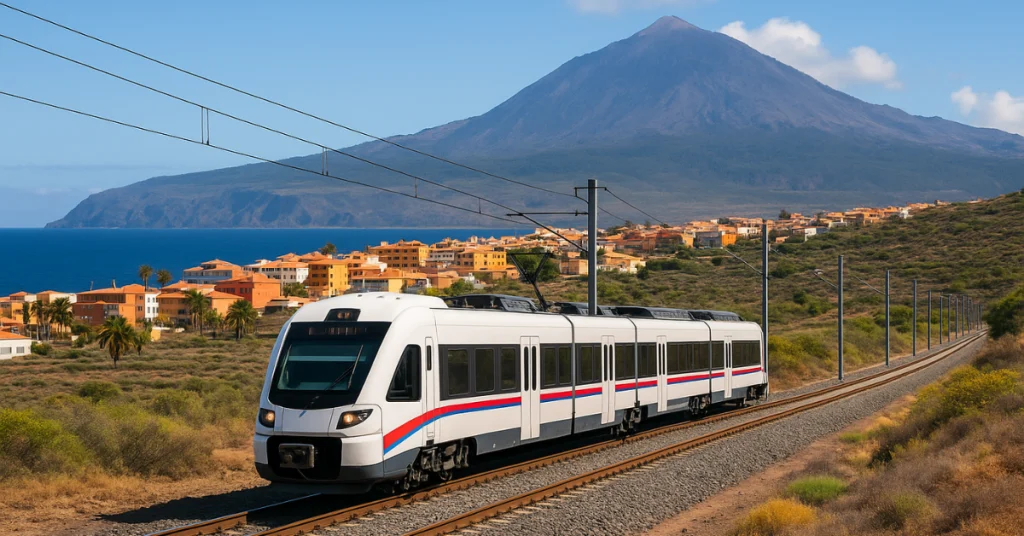
The train that will change the Canary Islands It's one of the most discussed developments in recent years. The news of a future rail network in the archipelago has sparked curiosity, especially among travelers: those who frequently visit the islands, those planning a trip, and those wondering if this infrastructure will finally make travel easier and faster.
In this article, we'll shed some light on this in a clear and helpful way, based on official information and reliable sources. Let's find out what we know, what's missing, and what impact all this could have on your next trip. holiday in the Canary Islands.
How far along is the project really?
Let's start with something important: the railway project is currently being studied and updated, not under construction.
Canary Islands authorities have reactivated the technical studies of recent years, particularly those dedicated to the future line in southern Tenerife, the only one to date to have preliminary documents and routes approved by the Cabildo and subject to new environmental updates.
Simply put:
- the official studies have been updated and validated,
- the preliminary tracks already exist,
- the financing agreements have been signed between the Government of the Canary Islands, the Central Government and the Cabildo,
- but there is no opening date yet, and the work has not yet started.
The reference project today is the one known as Southern Train, a line designed to connect the main tourist areas with the airport and the north of the island. This is where analyses, updates, and environmental assessments are being focused.
For those who travel, it means one simple thing: it is not a "tomorrow" project, but something that will change the travel experience. in the next few years.
What benefits could it bring to travellers?
Even though it's not yet operational, it's worth understanding why it's so talked about, and why it could become a turning point for those visiting the archipelago.
Here are the most concrete impacts that the train could have on travellers:
1. Reduction of traffic in the most visited areas
Anyone who's been to the Canary Islands is well aware of the traffic jams at certain times of the day. A rail system could ease the flow of cars and buses, making travel between tourist destinations smoother.
2. Much faster connections
Once operational, the train will dramatically reduce travel times between the airport, the south coast, tourist areas, and the metropolitan area. This means less time in the car and more time to experience the island.
3. A real alternative to rental cars
Not everyone wants to drive on vacation. Or not everyone can easily find available cars during the high season. The train could become a convenient, sustainable, and, above all, predictable solution.
4. Easier travel for families and groups
Luggage, strollers, beach gear: fast and stable transport can make life easier for families and large groups alike.
It reduces stress and makes travel more “holiday-like” and less logistical.
Canary Islands: Towards a more modern and sustainable mobility
The railway project isn't just about connecting a section of the island: it's part of a broader vision to make the Canary Islands a more accessible, modern, and sustainable archipelago.
The central theme is precisely that: transform the traveler experience, offering new mobility solutions alongside buses, taxis, and rental cars, which are currently the only truly available means of transport.
And this is where the concept of the train that will change the Canary Islands It takes on meaning: it is not just an infrastructure, but a project that aims to improve the way visitors experience and travel on the island, making it more similar to that of modern tourist destinations.
The challenges ahead and what's still missing
Like any major project, this one also brings with it critical issues and complex steps. These are aspects that are useful to understand to understand when, and how much, it will truly impact your vacation.
1. Timing still uncertain
There is no start date or opening forecast.
The studies have been updated, but definitive financing, tenders, permits, and environmental reviews will be needed. These processes take time.
2. Complex territory
The island's topography necessitates the construction of tunnels, viaducts, and technical sections that require highly precise planning. This increases both time and costs.
3. Integration with hotels and tourist areas
To be truly useful to travelers, the train will need to have stops close to where people are staying. Preliminary studies suggest this, but confirmation and final decisions will be needed.
4. High costs
The estimated costs for the construction of the southern line and future sections are significant. The project must be financed and supported financially over time, a step that is far from a given.
Conclusion
The train that will change the Canary Islands It's a real project, supported by official studies and institutional agreements, but it's not yet under construction. It will take time before it becomes an integral part of the travel experience.
For those who love the Canary Islands, or are thinking of visiting them, this is news to keep an eye on: faster, more sustainable, and organized mobility can make your holiday even more enjoyable.
Until then, travel will continue to be based on buses, taxis, and cars, but the future of the archipelago is moving, slowly but surely, towards a new way of experiencing the islands.