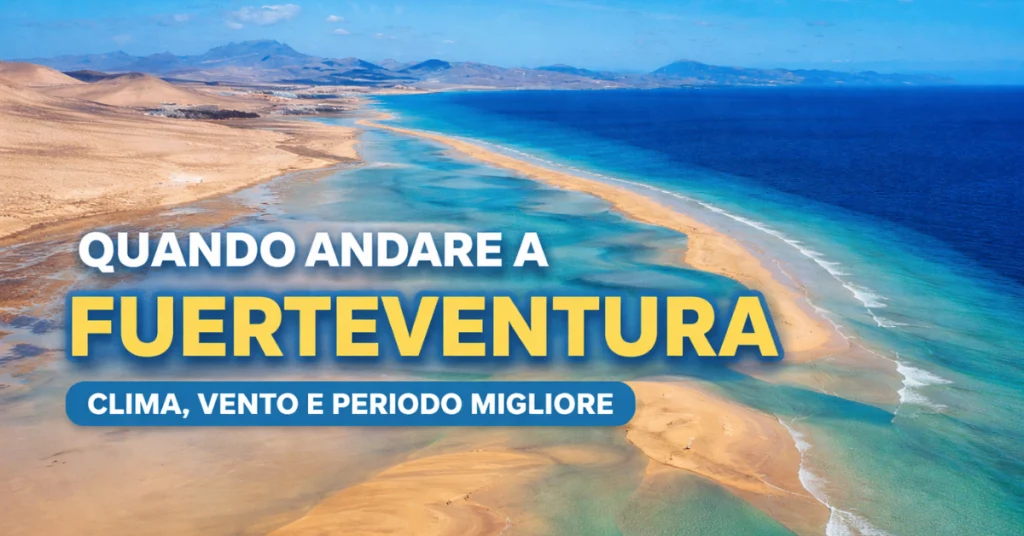
“Fuerteventura inspires me… but will the wind ruin the holiday?”
If you are looking for when to go to Fuerteventura, This is most likely your real doubt. The island is famous for its mild climate year-round, but also for its trade winds. And there's a significant difference between constant sunshine and strong winds.
You won't find generic phrases like "it's always nice" here. We'll explain when the weather is most balanced, when the wind can be bothersome, when the ocean is most pleasant, and the best time for your trip based on the type of trip you're planning.
When is there less wind in Fuerteventura?
The most stable period is September, October and the first half of November.
During these months, the winds drop significantly, temperatures remain high, and the ocean is at its best. It's the best balance between summer weather and greater tranquility.
Even winter, although cooler, is generally less windy than summer.

What is the least windy part of the island?
In Fuerteventura, the area counts almost as much as the month.
The south, between Morro Jable and Costa Calma, is generally more sheltered. The east coast tends to be more stable, while the north (Corralejo) and west coast are more exposed to the open ocean.
If the wind really worries you, choosing to stay in the south is a prudent decision.
Many ask where to stay to avoid the wind: the practical answer is simple: choose accommodations near sheltered beaches in the south of the island.
What is the weather like throughout the year?
Fuerteventura is a desert. It rains very little, and the occasional showers occur between December and February.
In winter (December–March), daytime temperatures hover between 20 and 23°C. Even a swimsuit is comfortable in the sun, but in the evenings, a sweatshirt or light jacket is needed because temperatures drop to around 15–16°C. It's the ideal time for those who want to escape the Italian cold without necessarily seeking "full summer.".
In summer (June–September), temperatures rise to around 26–29°C. August is the hottest month, but the lack of mugginess makes the heat much more bearable than in Italy. The wind, in this case, almost becomes an ally.
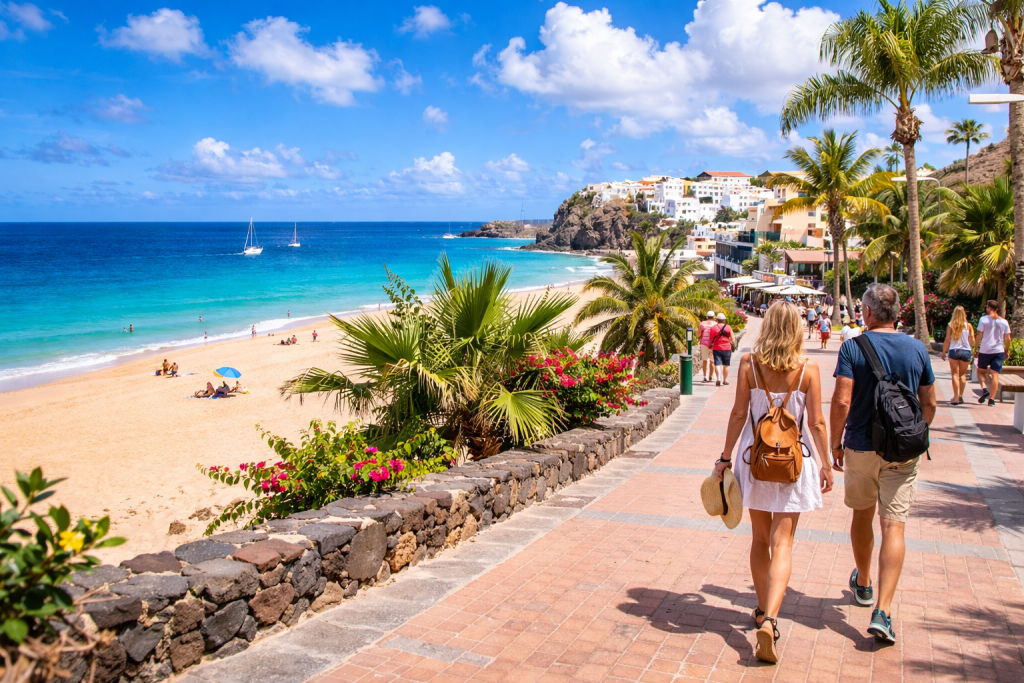
Can you swim all year round?
Let's be honest here: it's the Atlantic Ocean.
In winter, the water temperature hovers around 18–19°C. Swimming is possible, but it's best for those who aren't particularly sensitive to the cold.
The best time to swim is between September and October, when the ocean reaches its annual peak temperature, around 22–23°C. It's not the Mediterranean in August, but it's the most pleasant time for those who want to truly experience the sea.
The difference between air and water temperatures is an aspect that is often underestimated when choosing when to go to Fuerteventura.
What is the best time ever?
If we had to indicate the best compromise between climate, wind and water temperature, the answer is clear: September and October.
It's still warm, the wind is more moderate, the ocean is at its best, and the crowds are less than in August.
If your goal is simply to escape the Italian winter, the period between December and March is perfect: mild climate, lots of light, and a relaxed atmosphere.
If you're traveling for water sports, the choice is different: summer for wind (kite and windsurfing), winter for more interesting waves for wave surfing.
As for prices, transitional months such as November, February and May are often the cheapest.
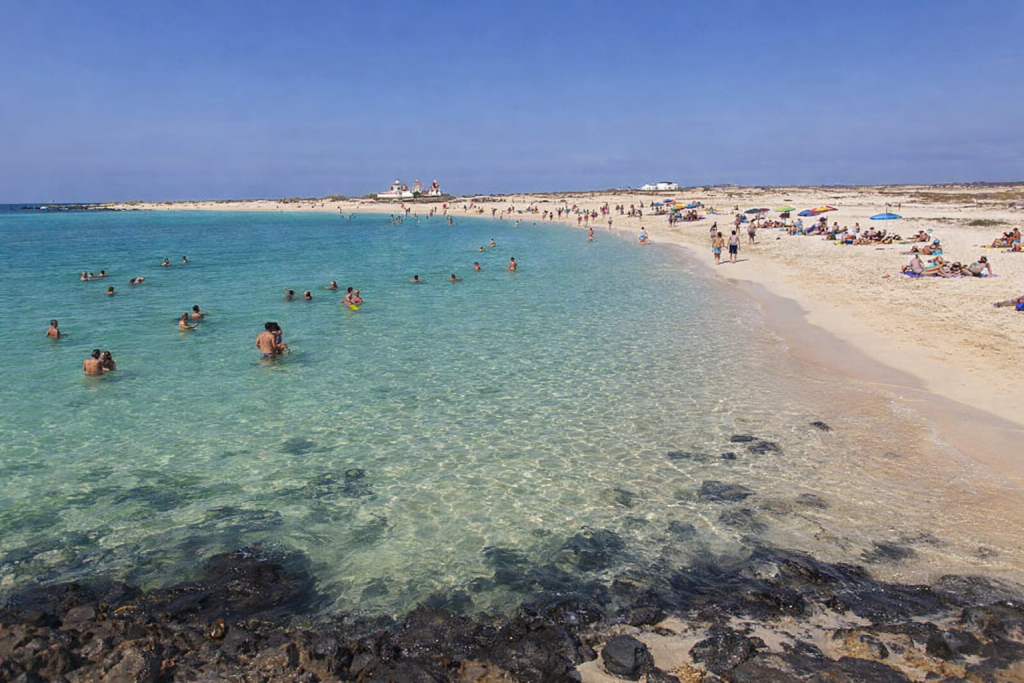
Is Fuerteventura or Lanzarote better if I'm afraid of the wind?
Fuerteventura is generally windier.
Also Lanzarote It is exposed to the trade winds, but in many cases it can be easier to manage, especially if the wind is your main concern and you are traveling in the height of summer.
If you love vast beaches, open spaces and a wild atmosphere, Fuerteventura remains unique.
How many days do you need to visit Fuerteventura?
At least 5–7 days.
It's a long island, with beaches spread far apart. Without a car, you risk being limited to one area. In a week, you can see both the north and south at a leisurely pace.
Practical advice from those who live here
After years in the Canary Islands, we can tell you this: Fuerteventura must be chosen with awareness.
It's not the right island if you're looking for calm seas and warm water year-round. It's perfect if you love open spaces, wild nature, vast beaches, and a dry climate.
If you're worried about the wind, choose the south. If you want the best version of the island, aim for September and October. And always pack a light jacket: even in summer, it can be useful in the evenings.
👉 BOOK YOUR TAILOR-MADE TRIP TO FUERTEVENTURA
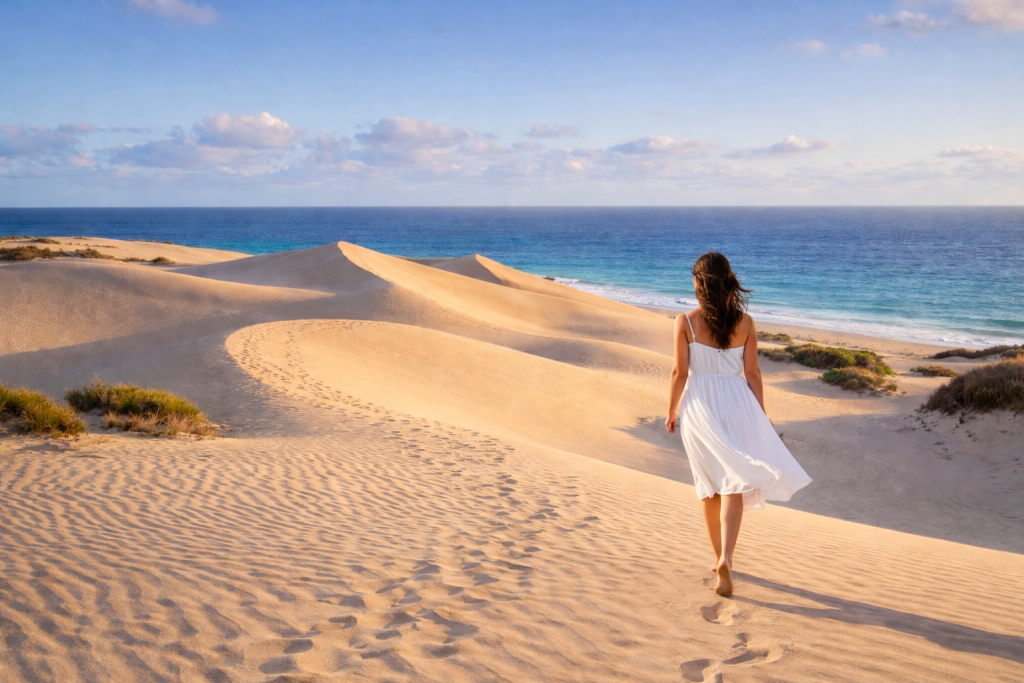
In conclusion
There's no universal answer to when to go to Fuerteventura. It depends on what you're looking for.
Less wind and a more pleasant sea? Late summer and early autumn.
Mild weather to escape winter? From December to March.
Sports and strong winds? It's summertime.
The right choice is the one that aligns your expectations with the island's reality. And if made at the right time, Fuerteventura is one of the most authentic experiences in the Canary Islands.