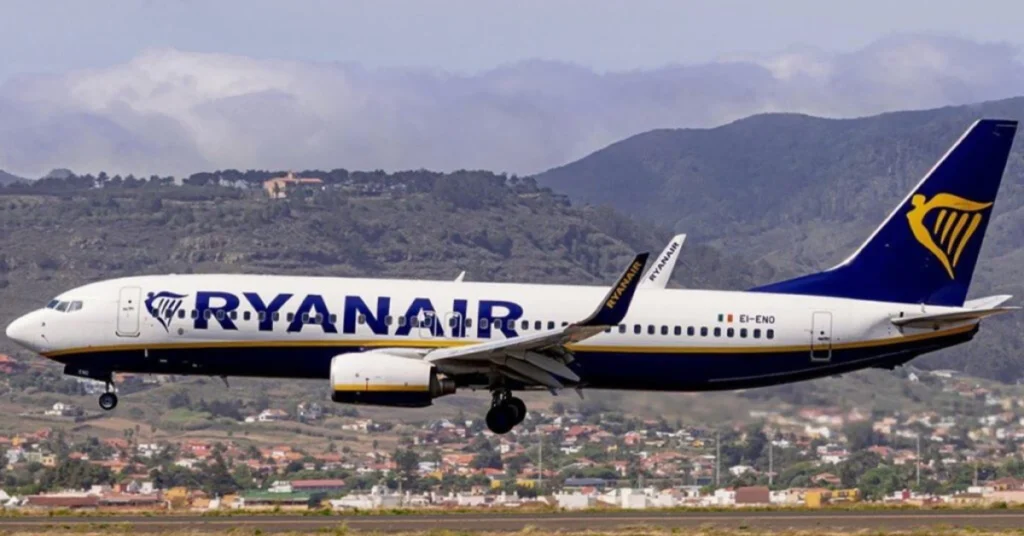
Ryanair cuts flights in the Canary Islands for the winter of 2025-2026, eliminating all connections from Tenerife North and reducing overall capacity on the islands by 101 TP3T. This represents approximately 400,000 fewer seats, a figure that sends a warning signal to tourism and the archipelago's economy, already challenged by other crises in recent years.
This move is part of a broader downsizing plan by the Irish airline, which includes cutting one million seats across Spain. Ryanair claims this is due to increased airport charges by Aena, the Spanish airport network operator.
The Canaries in the crosshairs: what will the islands lose?
Le Canary Islands are among the most affected by these cuts. In particular, the airport of Tenerife North will see all Ryanair operations cancelled, while other islands such as Gran Canaria, Fuerteventura and Lanzarote will suffer a sharp reduction in connections, with the elimination of 19 routes.
The total of 400,000 fewer jobs on the islands equates to a significant loss of connectivity, with immediate repercussions on the tourism sector, on seasonal employment and the entire local economic sector. For a region whose accessibility depends almost exclusively on air traffic, this is a significant blow.
The clash between Ryanair, Aena and the Government
The low-cost airline justified its partial withdrawal from the Spanish market with the increase in airport fees of 6.51 TP3T planned for 2026, which it considers “not very competitive” compared to other European countries such as Italy, Croatia or Morocco, where it is moving part of its capacity.
In response, Aena rejected the accusations, referring to a blackmail strategy by Ryanair, accusing it of wanting to obtain financial benefits This is detrimental to market rules and the sustainability of public finances. He also emphasized that many regional airports already enjoy reduced fares, and that the company is simply targeting more profitable hubs.
@todacanarias Ryanair cuts flights to the Canary Islands due to Arena's decision 👉🏻 Let us know what you think in the comments! #todacanarias #isolecanary #news #travel
♬ Original sound – Canary Islands | Toda Canarias
Not just the Canary Islands: other cancelled routes
Although Ryanair cuts flights in the Canary Islands, The reduction doesn't just affect the archipelago. Other regional airports will suffer significant cuts: Vigo will lose all connections starting from January 2026, Santiago de Compostela will see the closure of the operational base, and cities like Zaragoza, Santander, Asturias and Vitoria will undergo a downsizing between the 2% and the 45%.
In total, they are 36 routes cancelled, of which over half are in the Canary Islands. The remainder of the reduction, approximately 600,000 places, affects mainland Spain, significantly impacting destinations that rely on domestic tourism.
The Canaries must react now
The loss of low-cost connections represents a serious problem for the Canary Islands, which risk becoming less competitive compared to other destinations in the Mediterranean or North Africa. Regional institutions are called upon to defend the archipelago's air connectivity, attract new carriers and evaluate policies that encourage greater diversification of offerings.
If you don't act in time, the reduction of flights This could result in a decline in tourism during the winter months, a key period for the local economy. The Ryanair case should serve as a warning not to leave the islands too exposed to the choices of a single operator.
Conclusion
Ryanair's cancellation of flights to the Canary Islands represents a significant challenge for the future of tourism and employment on the islands. It's time for a serious discussion between airlines, authorities, and local authorities to find a balance between economic sustainability and the right to mobility, especially in island regions.