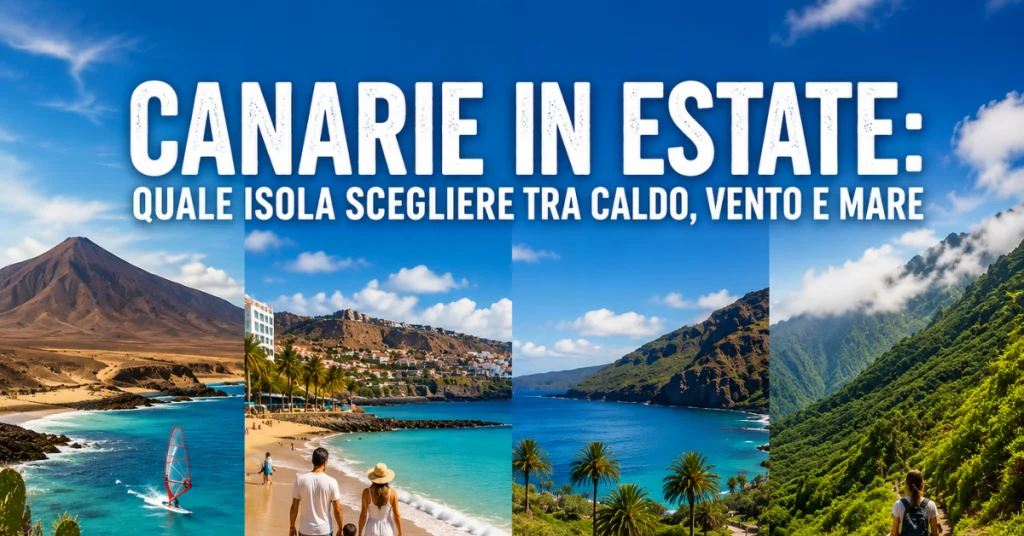
If you have already decided to come to the Canary Islands in summer, the real question is no longer "which island is more beautiful", but Which island is best suited to the type of holiday you want to experience?. Because between June and September, the archipelago divides into two very different climates: on one side, the eastern islands, warmer, drier, and decidedly windier; on the other, the central and western islands, where finding a sheltered beach is easier, but the sea remains slightly cooler.
In this guide, you'll see how each island fares in summer based on three specific variables—heat, wind, sea—and which one to choose based on your profile: sports enthusiasts, families, couples seeking relaxation, or travelers who simply can't stand excessive heat.
Why not all islands behave the same way in July and August
All the Canary Islands enjoy the same basic subtropical climate, but from June to September a factor comes into play that changes everything: the intensity of the’trade winds northeast, the archipelago's dominant wind. During the summer months, this wind blows more consistently and strongly, and the way each island "receives" it depends on its geography.
The eastern islands—Lanzarote and Fuerteventura—are flat and free of mountainous barriers: the wind passes through them almost unhindered, which is why they are also the islands where average summer temperatures rise the most (often above 28°C between July and September). Tenerife and Gran Canaria, on the other hand, have mountains that break the wind and create sheltered areas that vary greatly on the same island: the north is cloudier and cooler, the south is drier, sunnier, and more protected. The western islands—La Palma, La Gomera, El Hierro—lie on the margins of these winds and maintain a milder, greener, and more humid summer climate.
Once you understand this mechanism, choosing the right island becomes a matter of personal priorities, not luck.
Looking for wind and water sports? Fuerteventura and Lanzarote
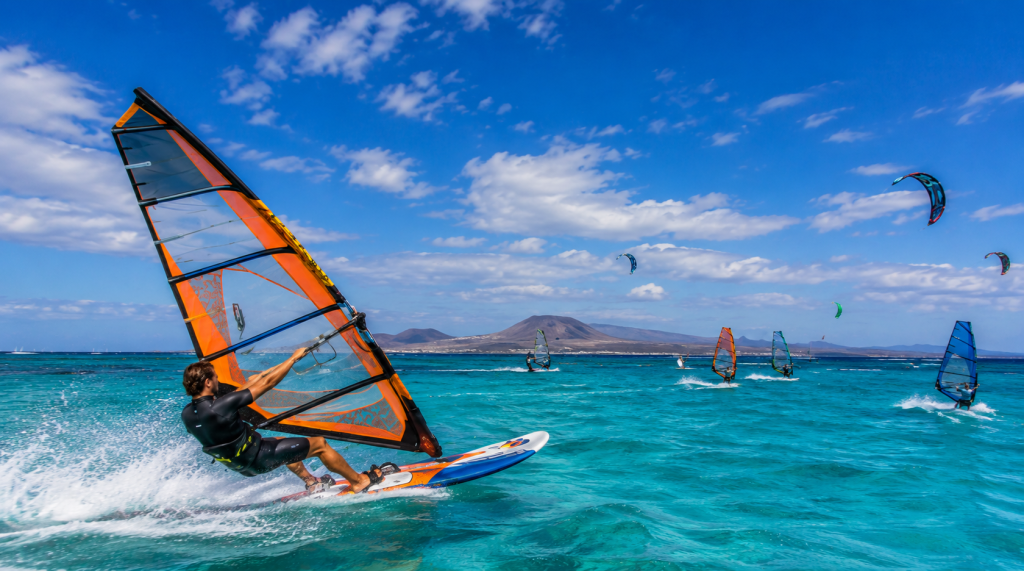
If windsurfing, kitesurfing, or surfing are part of the reason you come to the Canary Islands, the choice is almost obligatory.
Fuerteventura It is the absolute reference point of the archipelago for sailing sports: the Sotavento area, in the south, has hosted stages of the world windsurfing and kitesurfing circuit for years, thanks to a constant wind and a sea with ideal conditions almost all summer long. Lanzarote It is no exception: July is statistically the windiest month of the year on the island, with the beaches of Famara and Playa del Quemao among the most loved by surfers.
Who is it suitable for: athletes, couples and groups of active friends, those seeking volcanic and minimalist landscapes. For those NOT: those looking for quiet days on the beach without blowing sand, families with small children playing on the shore, those who suffer from the wind in their heads all day. Practical detail: The wind is strongest in the middle of the day and in the afternoon. If you still want to enjoy hours of quiet beach life, plan to relax early in the morning and play sports in the afternoon.
Looking for stable heat and little wind? Southern Tenerife and Gran Canaria.
If your goal is the classic beach-relaxation combination, without the wind as a "third wheel", the south coast of Tenerife e Gran Canaria It is the safest choice in the archipelago.
Areas like Costa Adeje, Playa de las Américas, and Los Cristianos in Tenerife, or Maspalomas, Puerto de Mogán, and Amadores in Gran Canaria, are located in areas naturally sheltered by the islands' inland mountains: the result is hot, dry days with much more manageable winds than on the eastern islands. It's no coincidence that these two islands are considered among the most reliable in the archipelago for those seeking guaranteed sunshine without surprises.
Who is it suitable for: those who want a beach and carefree relaxation, those who stay with their family or as a couple, those who also want excursions (Teide in Tenerife, Roque Nublo in Gran Canaria) in addition to the sea. For those NOT: those looking for wind for serious water sports, those who want to avoid the most touristy and crowded areas in summer. Practical detail: Avoid the north coast of the two islands in summer (Puerto de la Cruz on Tenerife, Las Palmas on Gran Canaria): here the sky is more often cloudy, a phenomenon linked to the same trade winds that make the eastern islands windy.
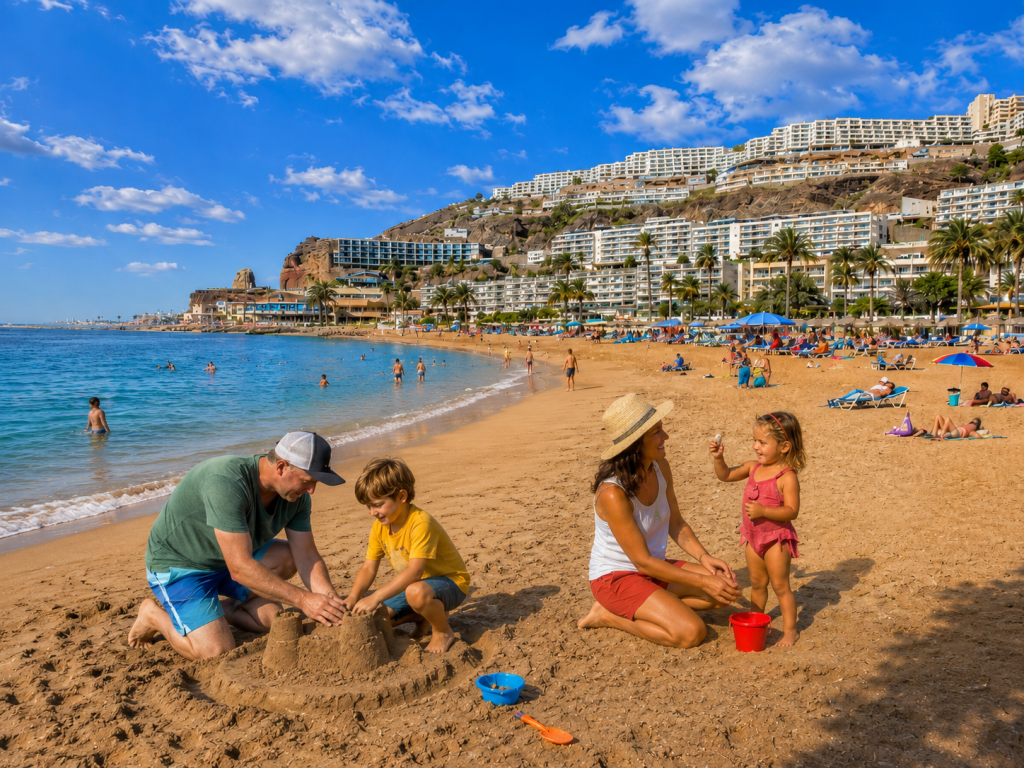
Traveling with small children? Here's where to go.
For families, the ideal combination is: calm sea, little wind for children, well-equipped beaches, and warm but not extreme temperatures.
The southern areas of Tenerife and Gran Canaria remain the most practical choice here too, due to the presence of sheltered beaches, well-equipped facilities, and short distances between accommodation and services. Lanzarote It can work equally well if you choose the southern part of the island (Playa Blanca area), which is more sheltered than the north and center. Fuerteventura, while beautiful, requires more care: some of its most famous beaches are precisely the windiest.
Who is it suitable for: families with small children, and those seeking logistical convenience in addition to climate. For those NOT: those who want isolated and wild beaches far from organized tourism. Practical detail: Always check the exposure of the specific beach, not just the island: even in Tenerife and Gran Canaria there are more or less sheltered bays a few kilometers away from each other.
Want to escape the heat? La Palma, La Gomera, El Hierro
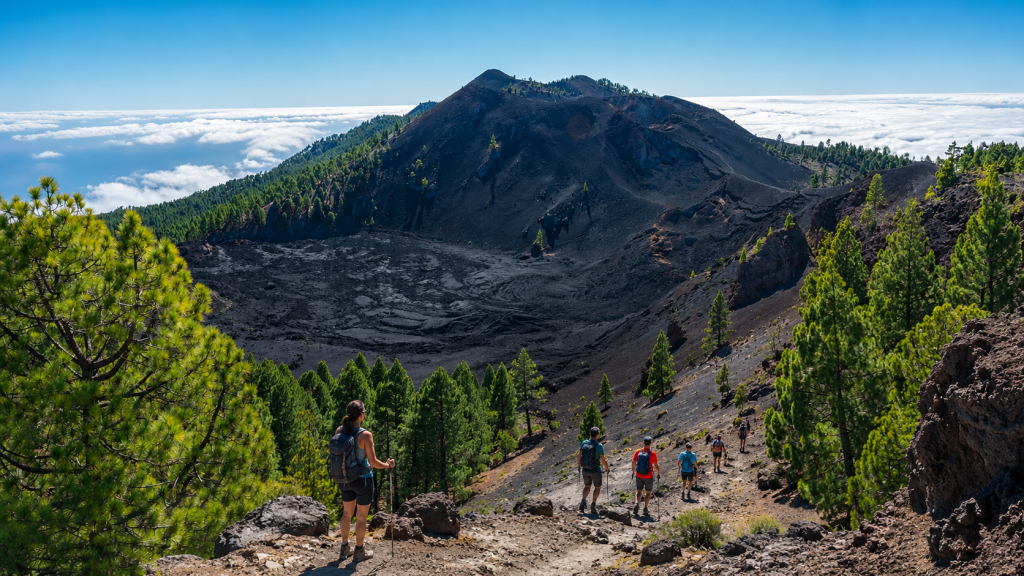
If the dry heat of the main islands isn't for you, or if your trip is more geared towards nature, trekking and green landscapes than beaches and sunbathing, the western islands remain the coolest option in the archipelago even in the height of summer: the average temperatures from July to September remain a couple of degrees lower than those of Lanzarote and Fuerteventura, with higher humidity and decidedly more lush vegetation.
Who is it suitable for: Trekking and nature lovers, those who have already visited the main islands and are looking for a different experience, and those who suffer from intense heat. For those NOT: those looking for nightlife, large resorts or long, sandy beaches (here rocky coasts and smaller beaches prevail). Practical detail: These are islands that are best experienced by rental car, to reach the most beautiful panoramic points and paths.
Practical details: when to book and common mistakes
When to book. June-September is high season for European tourism to the Canary Islands, not just Italian tourism. Booking well in advance (ideally a few months in advance) gives you access to more availability, especially in the most popular areas of southern Tenerife and Gran Canaria.
Common mistakes to avoid:
- Choosing the north coast thinking it is like the south. Same island, completely different climate: more clouds, less sun, temperatures that feel lower.
- Underestimating the afternoon wind in Fuerteventura and Lanzarote if you're traveling with small children or don't like spending hours on the beach with flying sand.
- Confusing “windy island” with “cool island”. The wind doesn't significantly lower the air temperature; it just makes it less pleasant when stationary. Lanzarote and Fuerteventura remain among the hottest islands in the archipelago in summer, wind included.
- Don't consider the calima. It is a hot, dry wind from the Sahara, more frequent in summer and on the eastern islands: when it arrives, it further raises temperatures and reduces visibility for a few days.
Advice from those who live in the Canary Islands
After years in the area, there are things you can only learn by living there, not by reading about them in a generic guidebook.
The first is that the wind in the Canary Islands has a timetable: It blows strongest in the early afternoon, almost everywhere in the archipelago. If you're booking an excursion or want quiet hours on the beach, early morning is almost always the best time, even in Fuerteventura and Lanzarote.
The second concerns the so-called “sea of clouds”On the northern coasts of Tenerife and Gran Canaria, the trade winds push a bank of low clouds against the inland mountains, which in some areas remains stuck for much of the day even in summer, while a short distance away, on the south coast, the sun is shining. This is why two people can return from the same island with conflicting weather reports—they simply stayed in different areas.
Third: if you are interested in the warmest sea of the year, it is not July-August but end of summer, when the ocean has been accumulating heat for months. Those who plan their trip solely with the heat in mind often miss out on the best conditions for being in the water.
Frequently Asked Questions
Which Canary Island is the hottest in summer? Lanzarote and Fuerteventura generally record the highest average temperatures between July and September, often above 28°C, due to their more easterly and exposed positions.
Which is the least windy island in the Canary Islands in summer? No island is completely windless in summer, but Tenerife and Gran Canaria offer more sheltered areas thanks to their inland relief, particularly on the south coast.
Where is the best place to go in the Canary Islands with small children in summer? Southern Tenerife and Gran Canaria remain the most practical choices, with sheltered beaches, well-equipped facilities, and more manageable winds than the eastern islands.
Is it true that it's never too hot in the Canary Islands? Low humidity generally makes the summer heat more bearable than the humid heat of many Mediterranean destinations, but on the eastern islands temperatures can still exceed 28-29°C, and calima episodes can cause them to rise even higher for a few days.
What is the sea temperature in the Canary Islands in summer? In the summer months the sea generally hovers between 22 and 24°C in the central islands, with a gradual increase towards the end of the season.
Should I avoid the Canary Islands in July and August due to excessive tourism? These are the busiest months, especially in the most popular areas of southern Tenerife and Gran Canaria: if you prefer fewer crowds, islands like La Palma or La Gomera remain a quieter alternative even in high season.
Still not sure which island is right for you?
Every travel profile has its perfect island, but the details—the exact area, the accommodations, the best time for your specific needs—truly make the difference between a good and a perfect vacation. Message us on WhatsApp and we'll help you build a customized itinerary, drawing on the firsthand knowledge of the area that only a local can provide.
In short: which island to choose
- Wind and water sports → Fuerteventura or Lanzarote
- Stable heat, little wind, comfort → South of Tenerife or Gran Canaria
- Family with small children → South of Tenerife, Gran Canaria or south of Lanzarote
- Escape the excessive heat, nature and trekking → La Palma, La Gomera or El Hierro
If you can't decide between two profiles, contact us: that's where we can help you the most.